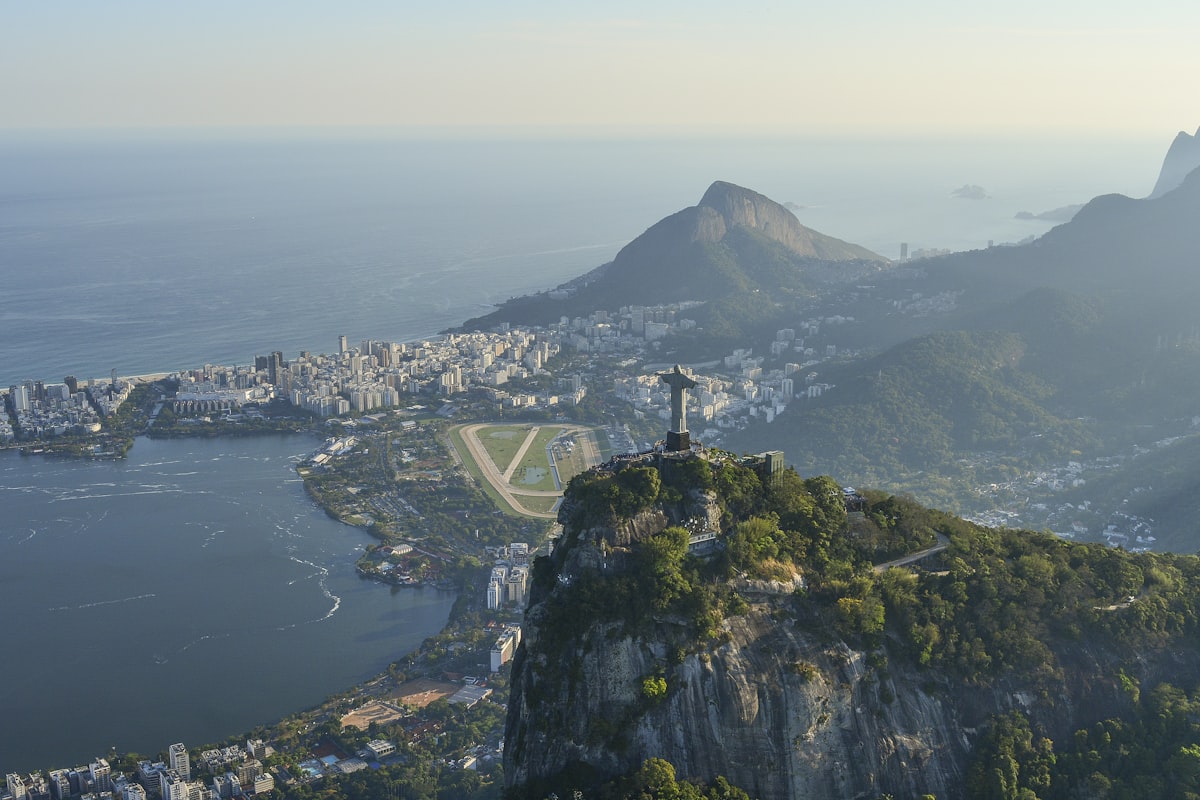
Rio de Janeiro is not defined by a single center or a fixed rhythm.
It unfolds through contrasts — between mountain and ocean, structure and spontaneity, everyday life and celebration. The city is shaped as much by its natural setting as by the way people move through it.
For travelers, Rio is less about controlling the experience and more about learning how to navigate its energy.
A Landscape That Defines the City
Few cities are as physically distinctive as Rio.
Mountains rise directly from the urban fabric. The coastline curves between neighborhoods. Green spaces interrupt dense areas without transition. The result is a city where nature is not separate — it is embedded.
For visitors, this creates:
-
Constant visual contrast
-
Natural orientation points across the city
-
A strong connection between environment and daily life
Rio is experienced through its geography.
Movement Between Distinct Zones
Rio does not function as a single continuous space.
Instead, it is a collection of zones — coastal districts, residential hillsides, urban centers — each with its own rhythm and identity. Moving between them requires awareness of distance, timing, and context.
This structure encourages:
-
Intentional planning between areas
-
Longer stays within neighborhoods
-
A more situational understanding of the city
Rio reveals itself in segments.
Expression as Everyday Culture
In Rio, expression is part of daily life.
Music, conversation, and social interaction are not confined to events. They appear naturally in public spaces — on streets, beaches, and in local neighborhoods.
For travelers, this means:
-
A strong sense of atmosphere
-
Cultural experiences that feel immediate rather than staged
-
A city that communicates through energy as much as structure
Rio is felt as much as it is observed.
Rhythm Defined by Time and Climate
Rio’s daily rhythm is shaped by heat, light, and social patterns.
Mornings often feel calm and open. Midday slows under the sun. Evenings bring renewed activity, especially in public spaces.
For visitors, timing matters:
-
Outdoor activities depend on temperature and light
-
Movement across the city benefits from planning
-
Flexibility improves comfort and experience
Rio rewards awareness of its rhythm.
Contrast Between Energy and Reflection
Rio is often associated with celebration, but it also offers moments of stillness.
Viewpoints, quieter neighborhoods, and natural spaces create opportunities for distance and perspective. These contrasts give the city depth beyond its most visible energy.
Who Rio de Janeiro Is For
Rio suits travelers who:
-
Appreciate cities shaped by natural landscapes
-
Are comfortable adapting to different environments
-
Value atmosphere, culture, and social energy
-
Prefer flexible exploration over rigid plans
It offers intensity and openness at the same time.
Explore Rio With an Intelligent City Guide
Because Rio’s experience depends on location, timing, and movement, context matters.
A smart city guide helps you:
-
Navigate between districts efficiently
-
Adapt plans based on weather and time of day
-
Discover areas that match your energy and interests
Instead of trying to control the city, you learn how to move within it.
Rio does not present a single identity.
It reveals itself through contrast, movement, and expression.