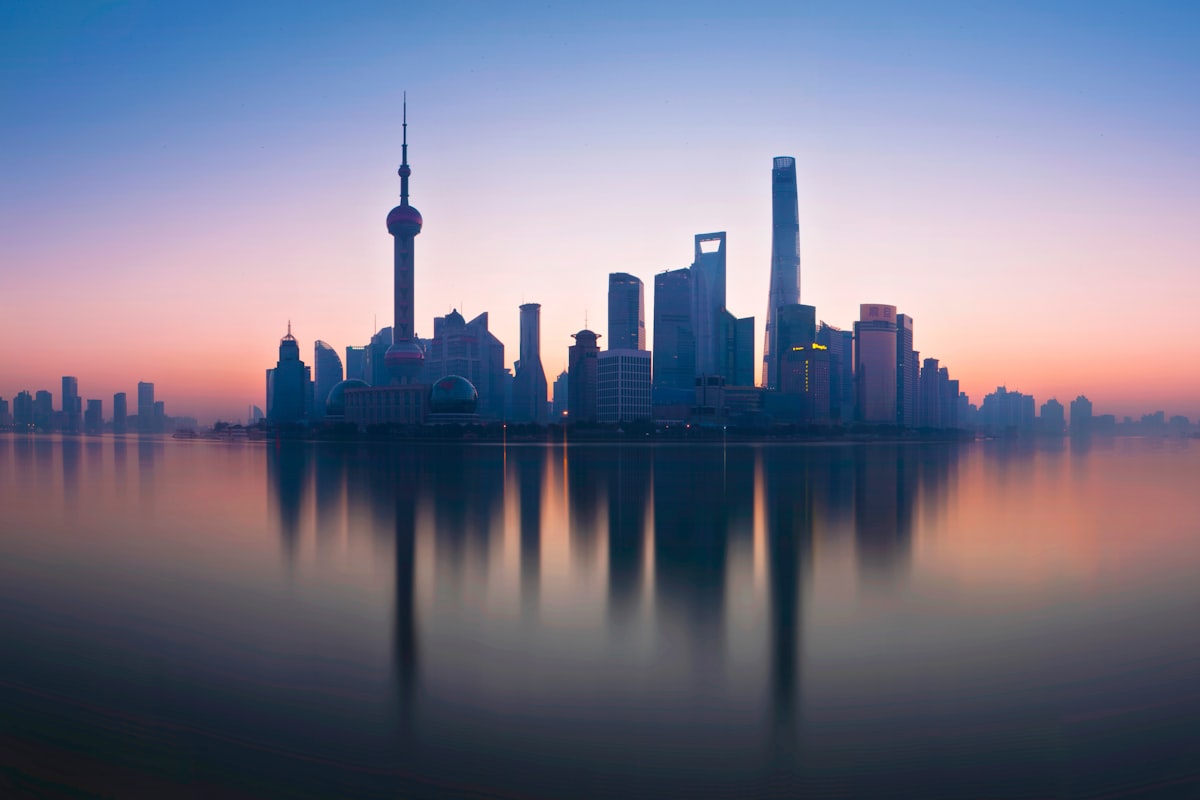
Shanghai does not unfold slowly.
It announces itself through motion — vertical growth, constant construction, and an energy shaped by acceleration. The city is built around momentum, and daily life reflects this forward orientation.
For travelers, Shanghai is not about easing into place. It is about understanding how a city operates at scale — and learning how to move within it.
Scale as a Daily Reality
Shanghai’s size is not abstract.
It is felt in distances, density, and the sheer volume of movement. Streets stretch wide. Buildings rise quickly. Entire districts function as self-contained systems.
Yet this scale is highly organized. Infrastructure is designed to handle intensity, allowing the city to function smoothly despite its size.
For visitors, this creates:
- Clear urban logic beneath apparent complexity
- Efficient movement across large distances
- A sense of controlled energy rather than chaos
Shanghai manages enormity through structure.
Speed as Cultural Orientation
Speed shapes how Shanghai thinks.
Decisions are made quickly. Spaces change rapidly. What feels new today may already be evolving tomorrow. This pace is not performative — it is operational.
For travelers, this means:
- The city feels constantly current
- Adaptability improves experience
- Planning benefits from real-time awareness
Shanghai values responsiveness over routine.
A City of Distinct Zones
Shanghai is best understood through its functional districts.
Rather than blending uses gradually, the city organizes itself into zones — commercial, residential, cultural, and historical — each operating at its own tempo.
Moving between these areas can feel like shifting modes:
-
High-intensity business districts
-
Dense residential neighborhoods with local rhythms
-
Historic quarters embedded within modern surroundings
Understanding Shanghai means understanding purpose.
Modernity Built on Continuity
Despite its forward-facing identity, Shanghai retains strong historical undercurrents.
Traditional structures, street patterns, and social habits persist within the modern city. These elements are not preserved separately — they coexist with rapid development.
This creates a city that feels:
-
Contemporary but rooted
-
Fast-moving yet culturally anchored
-
Experimental without being detached
Shanghai does not erase its past. It integrates it.
Navigation as a Skill
In Shanghai, navigation is part of the experience.
Distances, transit systems, and timing all influence perception. Knowing where to be — and when — significantly shapes how the city feels.
For travelers, this means:
-
Strategic planning enhances freedom
-
Context reduces friction
-
Guidance adds clarity rather than constraint
Shanghai rewards informed movement.
Who Shanghai Is For
Shanghai suits travelers who:
-
Are curious about modern urban scale
-
Enjoy fast-paced environments
-
Appreciate structure beneath complexity
-
Want to experience a city in motion
It challenges and engages simultaneously.
Explore Shanghai With an Intelligent City Guide
Because Shanghai operates at speed and scale, context matters.
A smart city guide helps you:
- Navigate large districts efficiently
-
Adjust plans based on timing and location
-
Discover meaningful areas without overload
Shanghai does not slow itself for visitors.
It invites them to keep up.