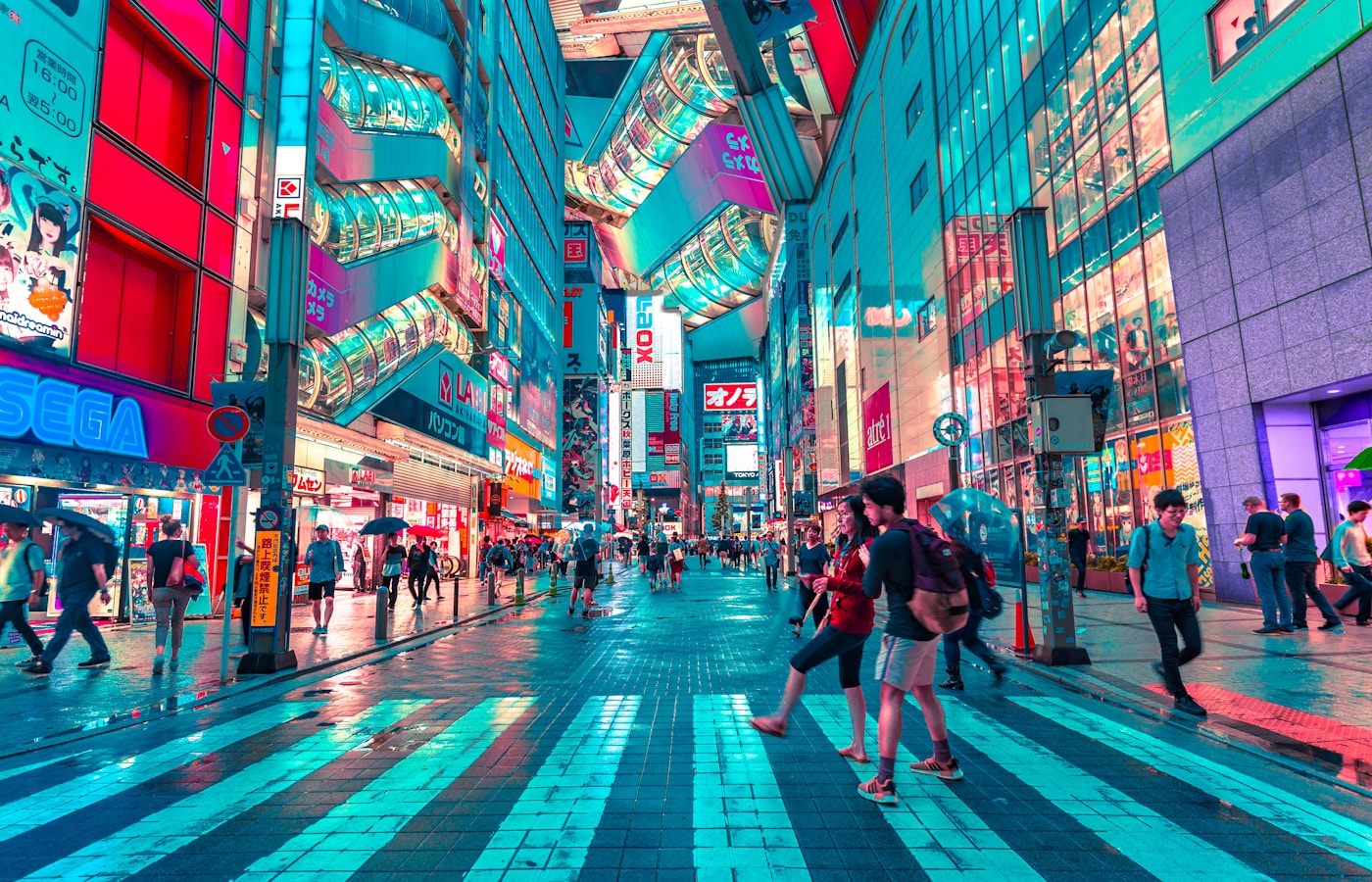
Tokyo rarely announces itself.
Despite its size and density, the city operates with remarkable restraint. Noise is controlled. Movement is coordinated. Complexity exists, but it is carefully managed.
For travelers, Tokyo is not overwhelming once you understand its logic. It is a city that rewards observation, patience, and respect for structure.
Scale Without Chaos
Tokyo is one of the largest metropolitan areas in the world, yet it rarely feels disordered.
This sense of calm comes from systems — transport, signage, routines, and social norms — all working together. Density is high, but friction is low.
For visitors, this creates:
-
Predictable movement through complex spaces
-
Clear transitions between districts
-
A feeling of safety and control, even in busy areas
Tokyo manages scale through precision.
Neighborhoods Defined by Function and Mood
Tokyo does not revolve around a single center.
Instead, it is a network of districts, each shaped by a specific role — business, residential life, nightlife, culture, or transit. These areas feel distinct, yet connected.
Moving between neighborhoods can feel like entering different cities:
-
Calm residential streets moments from major hubs
-
Commercial districts that activate only at certain hours
-
Cultural zones built around routine rather than spectacle
Understanding Tokyo means understanding context.
Order as a Cultural Value
Tokyo’s sense of order is not enforced — it is shared.
Daily life follows clear expectations: where to stand, how to move, when to speak. These unspoken rules create harmony rather than restriction.
For travelers, adapting to this rhythm leads to:
-
Smoother interactions
-
Reduced stress in crowded spaces
-
A deeper sense of belonging, even temporarily
Tokyo invites cooperation, not conformity.
Contrast as a Constant
Tokyo thrives on contrast.
Traditional elements exist alongside advanced technology. Quiet streets sit near hyperactive districts. Minimalism and excess coexist without conflict.
These contrasts are not staged — they are structural. The city allows different modes of life to exist simultaneously.
Time, Routine, and Precision
Timing matters in Tokyo.
Daily routines shape how districts feel throughout the day. Morning efficiency, afternoon calm, and evening activation follow reliable patterns.
For travelers, this means:
-
Certain experiences work best at specific times
-
Planning enhances freedom rather than limiting it
-
Small adjustments can significantly improve comfort
Tokyo rewards attentiveness.
Who Tokyo Is For
Tokyo suits travelers who:
-
Appreciate structure and clarity
-
Enjoy cities with strong internal logic
-
Are curious about cultural systems
-
Value calm over spectacle
It offers depth through discipline.
Explore Tokyo With an Intelligent City Guide
Because Tokyo operates on systems and timing, guidance matters.
A smart city guide helps you:
-
Navigate complex transport efficiently
-
Choose neighborhoods based on mood and time
-
Adjust plans seamlessly throughout the day
Instead of fighting the city’s scale, you move with its order.
Tokyo does not demand attention.
It earns it through precision.